

Kaapstad het nog ’n stap verder gevorder in sy strewe om die grootmaat kragaankope van Eskom te verminder deur die in-werkingstelling van ’n
R93 miljoen kargstasie wat metaangas uit vullishope te onttrek wat dan gebruik word in die kragstasie om elektrisiteit op te wek.
Hiedie pioeniers-kragstasie is by die Kuspark vullishoop op 12 November deur die Burgemeester Geordin Hill-Lewis, amptelik aangeskakel en sal voldoende krag voorsien vir die elektrisiteitsbehoefte van sowat 4 000 huishoudings.
’n Verdere bedrag van R82m is begroot om hierdie infrastruktuur ook na ander vullishope binne die volgende drie jaar uit te brei.
Om die vullishoop-gas na elektrisiteit om te skep word geperforeerde pype binne putte wat in die vullishope gesink word geplaas waar die gas onttrek en na die kragstasie gekanaliseer word.
Daar word bereken dat by die Kuspark vullishoop die Stad se afval-tot-energie projek sowat 1,3 miljoen kWh per maand sal opwek.
Hiervan sal 1,2 miljoen kWh direk in Kaapstad se network ingevoer word wat genoegsaam is vir 4 000 huishoudings.
Die res van die krag sal gebruik word vir die bedryf van die vullisfasiliteit wat nog ’n verdere effektiewe besparing vir die belastinbetalers beteken.

The new Coastal Park Landfill gas-to-energy plant is up and running.

Cape Town Mayor Geordin Hill-Lewis powered-up the new electricity generation plant on Wednesday, 12 November together with Mayoral Committee Members for Urban Waste Management, Alderman Grant Twigg, and for Energy, Alderman Xanthea Limberg.
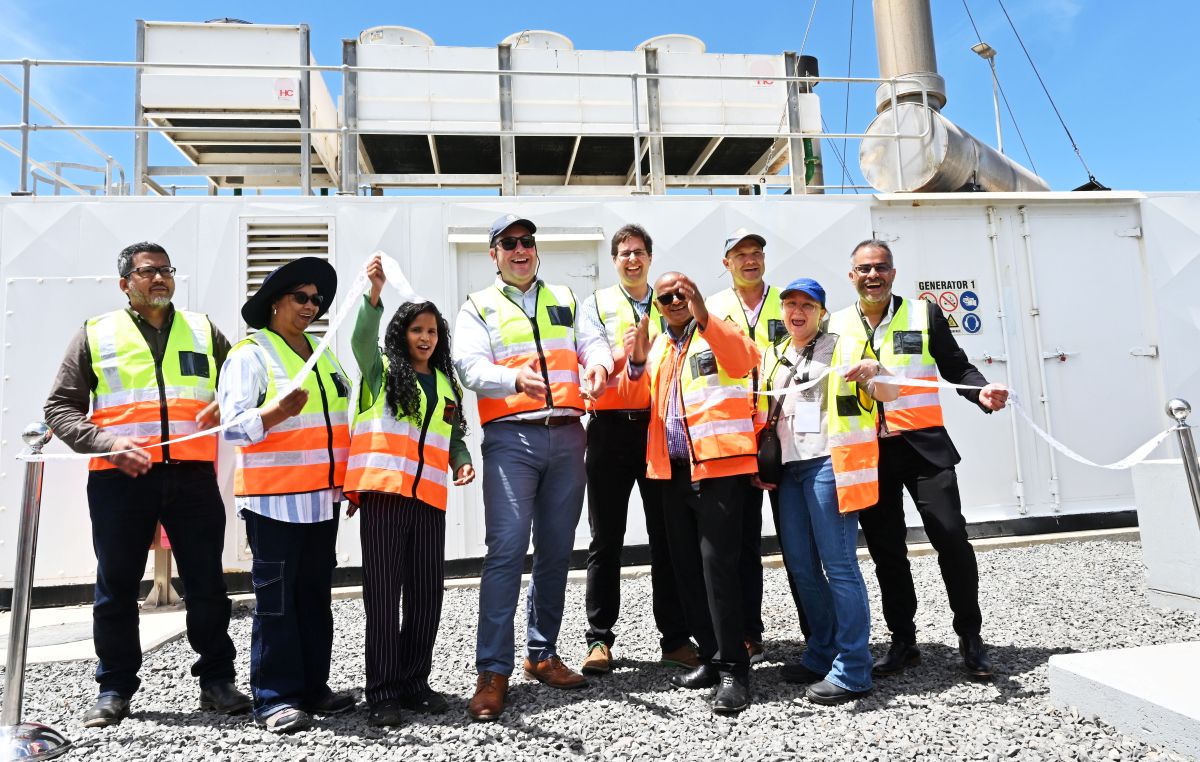
City officials launch the new Coastal Park Landfill gas-to-energy plant.
Cape Town switches on pioneering gas-to-energy plant, powering over 4 000 households
Cape Town Mayor Geordin Hill-Lewis says the City’s new gas-to-energy plant will generate enough electricity to power 4 300 households by converting landfill gas to power at the Coastal Park Landfill. The Mayor powered-up the new electricity generation plant on Wednesday, 12 November together with Mayoral Committee Members for Urban Waste Management, Alderman Grant Twigg, and for Energy, Alderman Xanthea Limberg.
The City has invested R93 million in the Coastal Park Landfill gas-to-energy plant to date, and will invest a further R82m to expand this infrastructure at more landfill sites over the next three years.
These initiatives are set to pay for themselves in time thanks to reduced bulk electricity purchases from Eskom and the sale of carbon credits. A total of R36 m in carbon credits has already been generated by reducing gas emissions at City landfill sites.
‘It was exciting to power-up our landfill gas-to-power plant at Coastal Park Landfill today. We are just getting started with these win-win projects, which produce electricity, reduce emissions, and generate carbon credit revenue to pump back into infrastructure and waste management. In this way, Capetonians are getting plenty of public value from these gas-to-power operations, which we will keep expanding over the coming years at other landfills,’ said Mayor Hill-Lewis.
To convert landfill gas into electricity, the City has dug perforated pipes or ‘wells’ into landfill sites to extract methane gas. The gas is then channelled as fuel to produce electricity, also reducing methane emissions.
‘At Coastal Park Landfill, the City’s waste-to-energy project will generate 1,3 million kWh a month. Of this, 1,2 million kWh will be fed into the Cape Town grid. This is enough power to supply more than 4 000 households. The remaining power will be used to run operations at the landfill facility, generating further savings and efficiency for ratepayers,’ said Alderman Twigg.
Issued by: Media and News (capetown.gov.za)


